Whispers in the Granite
The Hitching Rings of the Old Burying Ground
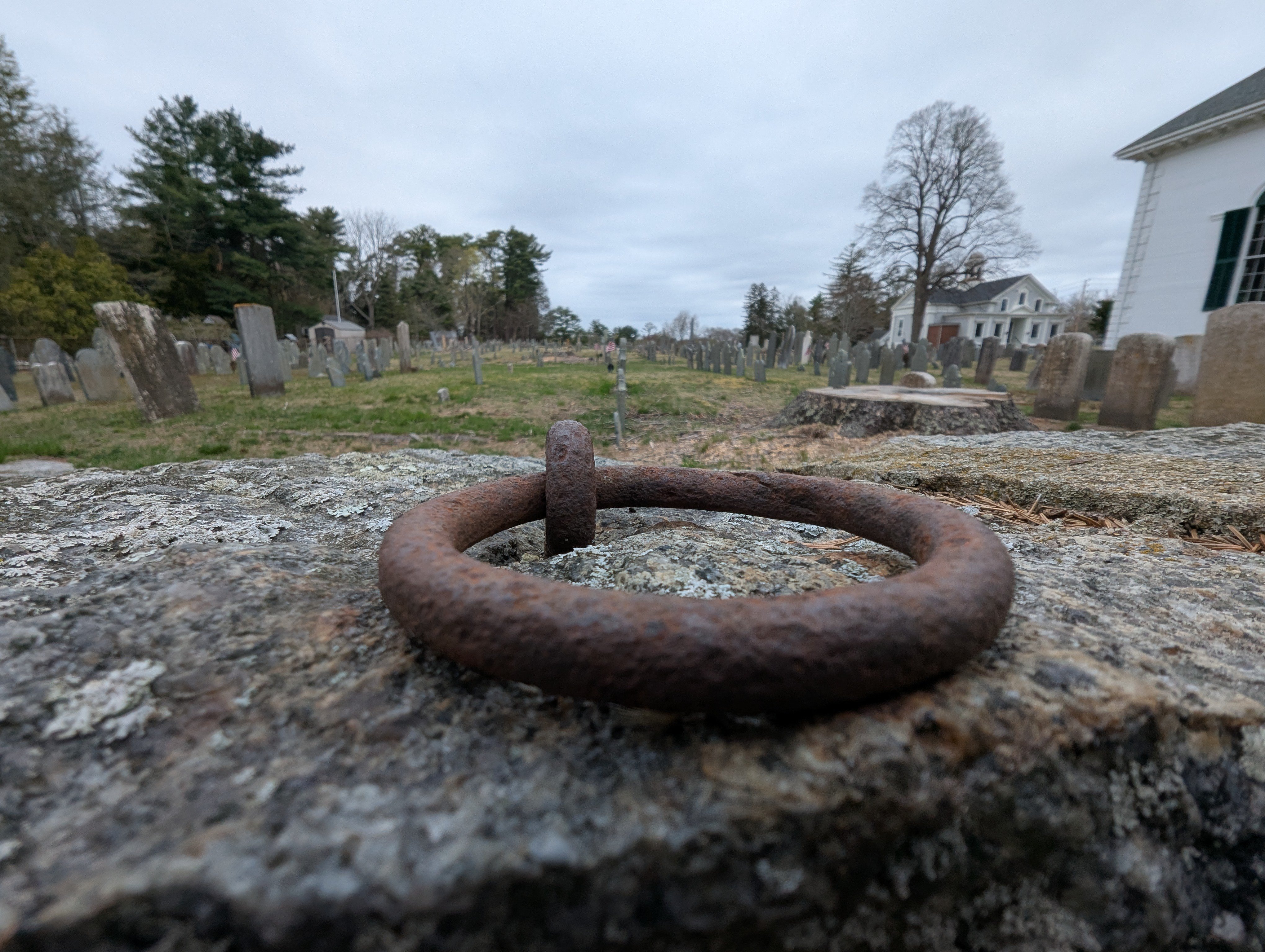
If you take a stroll past the heavy granite walls bordering Kingston's Old Burying Ground — established back in 1717 when we were still known as the North Precinct of Plymouth — it is easy to keep your eyes fixed on the historic slate headstones. But if you look down at the flat capstones of the perimeter wall, you will find a literal link to Kingston's everyday past.
Forged by hand, deeply pitted by time, and coated in a thick patina of rust, a heavy iron ring still sits anchored into the stone.
A Sunday Morning in the 1800s
To understand this ring, we have to travel back to a crisp autumn Sunday in the early 19th century. There are no paved roads here, no hum of traffic from Route 3A, and certainly no cars. Instead, Main Street echoes with the rhythmic clop-clop of hooves and the wooden creak of carriage wheels.
Families from all corners of town are arriving at the First Parish Church. A local farmer pulls his horse and wagon up to the massive granite wall. The horse, eager to rest after the haul, huffs into the chilly morning air.
The farmer hops down, loops a thick leather lead rope through this very iron ring, and ties a secure hitching knot.
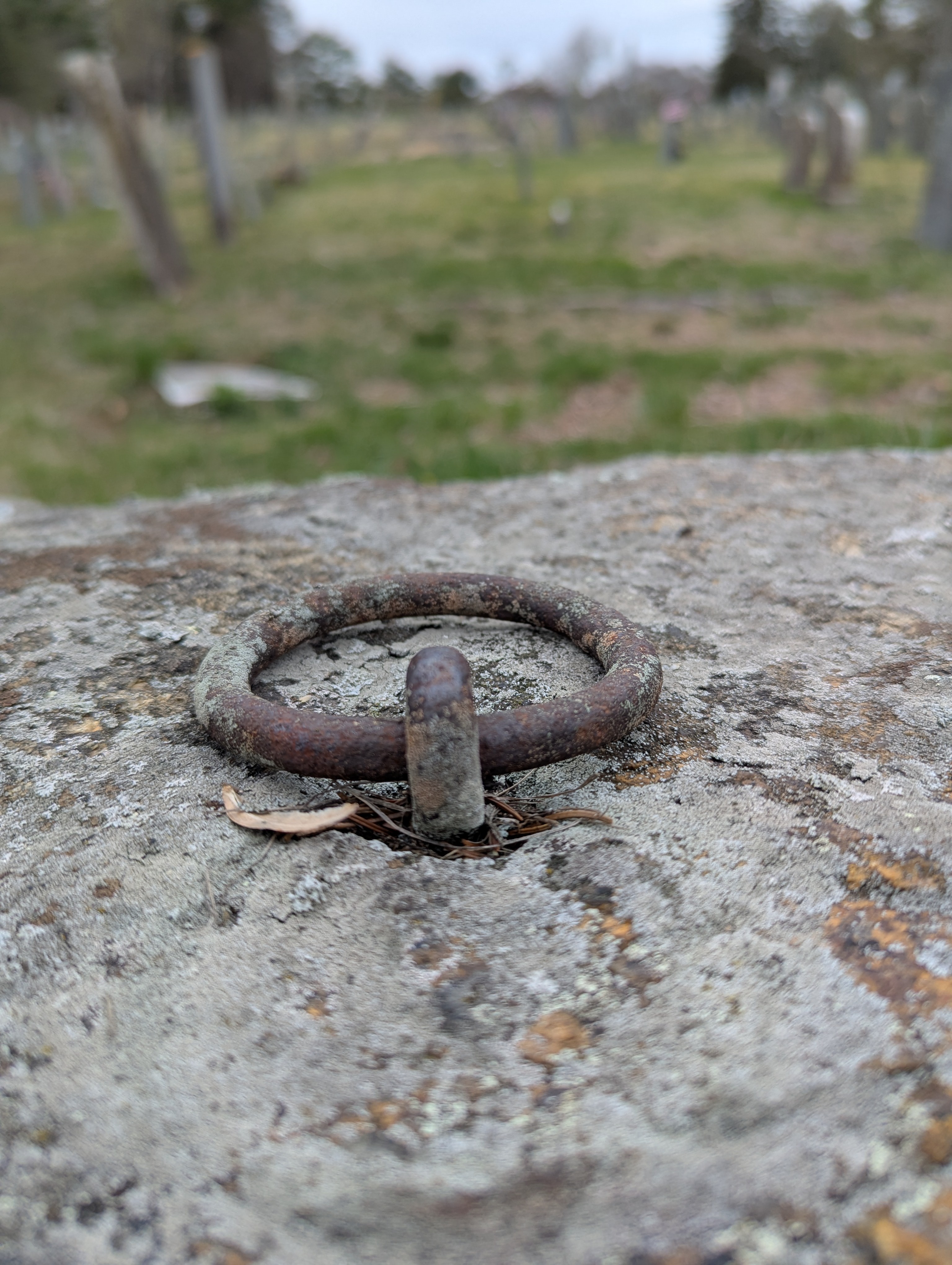
Centuries of weather have coated the iron in rust, but the ring remains firmly anchored in granite
Built to Last Centuries
These rings weren't just slapped onto the wall; they were engineering marvels of their day. A colonial blacksmith hand-forged the iron eye-bolt and ring. Then, workers labored with a sledgehammer and a star drill, painstakingly pounding a hole inches deep into the solid New England granite.
Once the iron pin was dropped into the stone, molten lead was poured into the gap. As the lead cooled, it locked the iron to the granite with a grip so fierce that even a spooked, thousand-pound horse couldn't budge it.
A Touchstone for Our Tricentennial
The horses are long gone, replaced by the cars parked along the street today. The churchgoers and farmers who tied their mounts here have long since been laid to rest just a few yards away under the slate and marble markers.
Yet, as Kingston celebrates 300 years of history, this humble piece of iron remains exactly where a local craftsman placed it centuries ago. It is a quiet, tangible reminder of the days when the pace of life in Kingston was measured by the stride of a horse, waiting patiently by the graveyard wall.
Find it yourself: Look along the granite perimeter wall of the Old Burying Ground on Main Street, Kingston — established 1717.
More Kingston Stories
Kingston Heritage Project — Honoring 300 Years of Kingston History