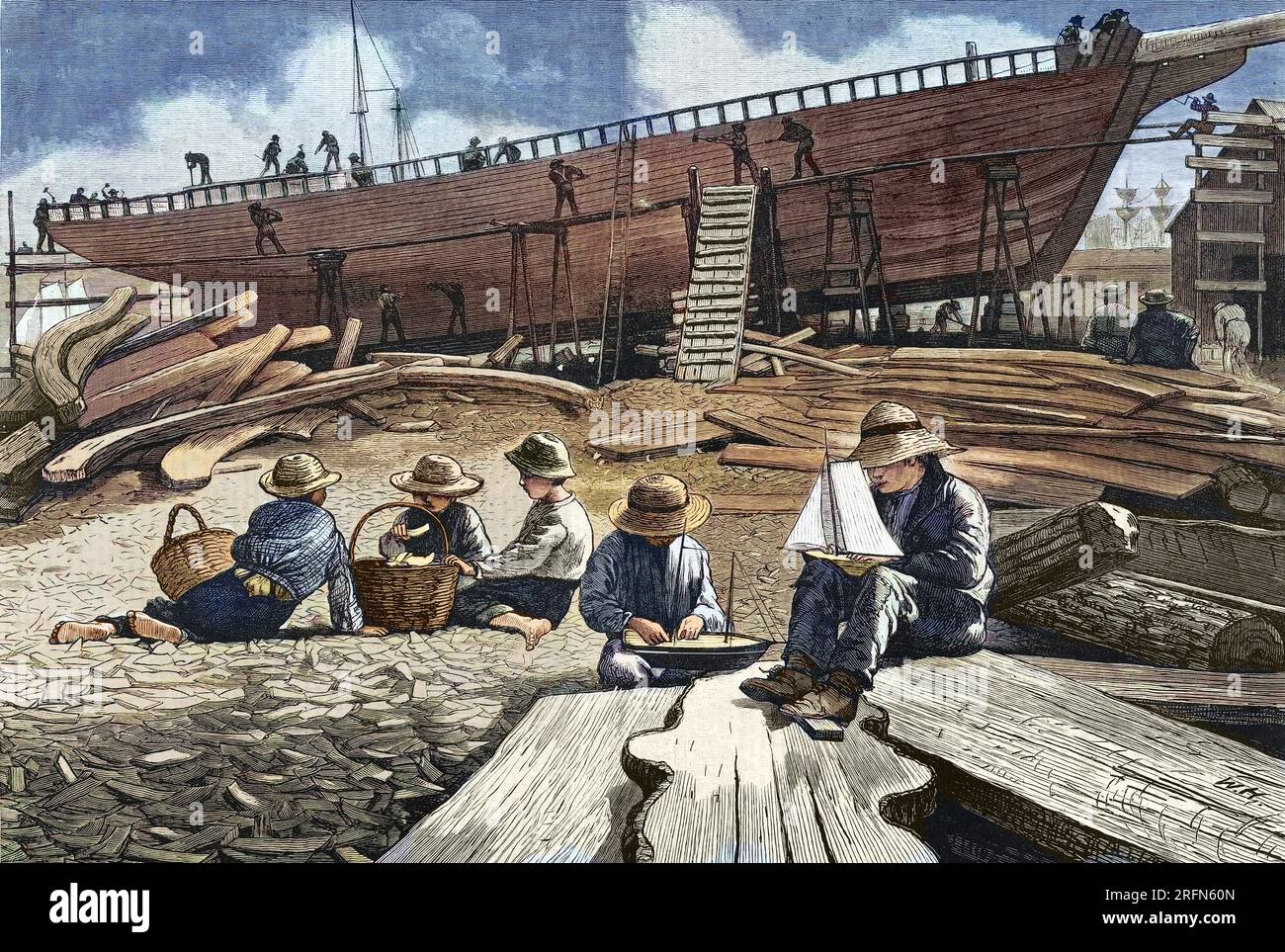
Jones River Shipbuilders
The skilled craftsmen and industrious families who built more than 270 ships on the historic Jones River
The Heart of Kingston's Economy
While Kingston was founded on agriculture and the need for local governance, the town's prosperity and identity were forged in the shipyards along the Jones River. The river provided not only a transportation route to the sea but also power for early industries, including sawmills, grist mills, and iron works that produced anchors and other maritime necessities from local bog iron.
From the 1700s until the late 19th century, Kingston was an important center for early American shipbuilding. The Jones River Landing is recognized as one of the longest continuously operating boatyards in North America. Over its nearly 176-year shipbuilding history, the town producedmore than 270 ships.
A crowning achievement of Kingston's shipbuilders was the construction of the Brig Independence, one of the first commissioned naval vessels of the fledgling United States during the Revolutionary War.
Ships Built
Years Active
Industry Began
Last Ship Built
Prominent Shipbuilding Families
The dynasties who built fortunes and vessels along the Jones River
The Drew Family
The Drews were a prolific shipbuilding dynasty. Cornelius Drew employed his sons in the family business. His son Zenas Drew (1735-1822) operated a shipyard on the banks of the Jones River. The Drew family shipyard was responsible for building the legendary Brig Independence.
The Delano Family
The Delanos were powerful merchants and ship owners central to Kingston's maritime economy. In 1802, Benjamin Delano and Peter Winsor constructed the stone Delano Wharf and Warehouse at Rocky Nook. Benjamin and his son Joshua owned shares in 37 different vessels between 1803 and 1882.
The Holmes Family
Joseph Holmes (1772-1863) was one of the nation's largest shipbuilders and owners, credited as the registered builder of 24 vessels. In 1810, he acquired property on Landing Road for his wharf and dock. His son Edward continued building ships until 1874.
The Delano Wharf & Warehouse
In 1802, Benjamin Delano and his brother-in-law Peter Winsor constructed the stone Delano Wharf and Warehouse at Rocky Nook, a peninsula where the Jones River meets Plymouth Bay. This wharf became a hub for storing cargo and outfitting newly built ships.
The warehouse served as the center of Kingston's maritime commerce, where goods were stored before being loaded onto vessels bound for ports along the eastern seaboard and the West Indies.
Benjamin and his son Joshua Delano owned or held shares in 37 different vessels between 1803 and 1882, many of them built in Kingston yards. The Delano family's enterprise exemplified the interconnected nature of Kingston's shipbuilding, merchant, and trading industries.
Delano Family Legacy
- 37 vessels owned or co-owned
- Stone warehouse built 1802
- Active in maritime trade 1803-1882
- Rocky Nook trading hub
The End of an Era
The era of wooden shipbuilding in Kingston waned in the late 19th century with the rise of railroads, which offered faster transportation, and the maritime industry's shift toward larger, iron-hulled steamships that required deeper harbors than the Jones River could provide.
Though the age of sail and wooden shipbuilding has passed, this rich maritime heritage remains a cornerstone of Kingston's historical legacy. The Jones River Watershed Association continues to preserve this history, operating from the historic landing where ships were once launched.
"The shipyards of Kingston, led by industrious families like the Drews, Delanos, and Holmeses, produced vessels that contributed to the commerce and defense of the nation."
Historical Sources
- • Holmes Shipyard Records - Mystic Seaport Museum (Collection 142)
- • Jones River Village Historical Society - jrvhs.org
- • Jones River Watershed Association - jonesriver.org
- • Ships of Kingston: 276 Vessels Built 1776-1898 - Town of Kingston Archives
- • Buildings of New England - Kingston Maritime History