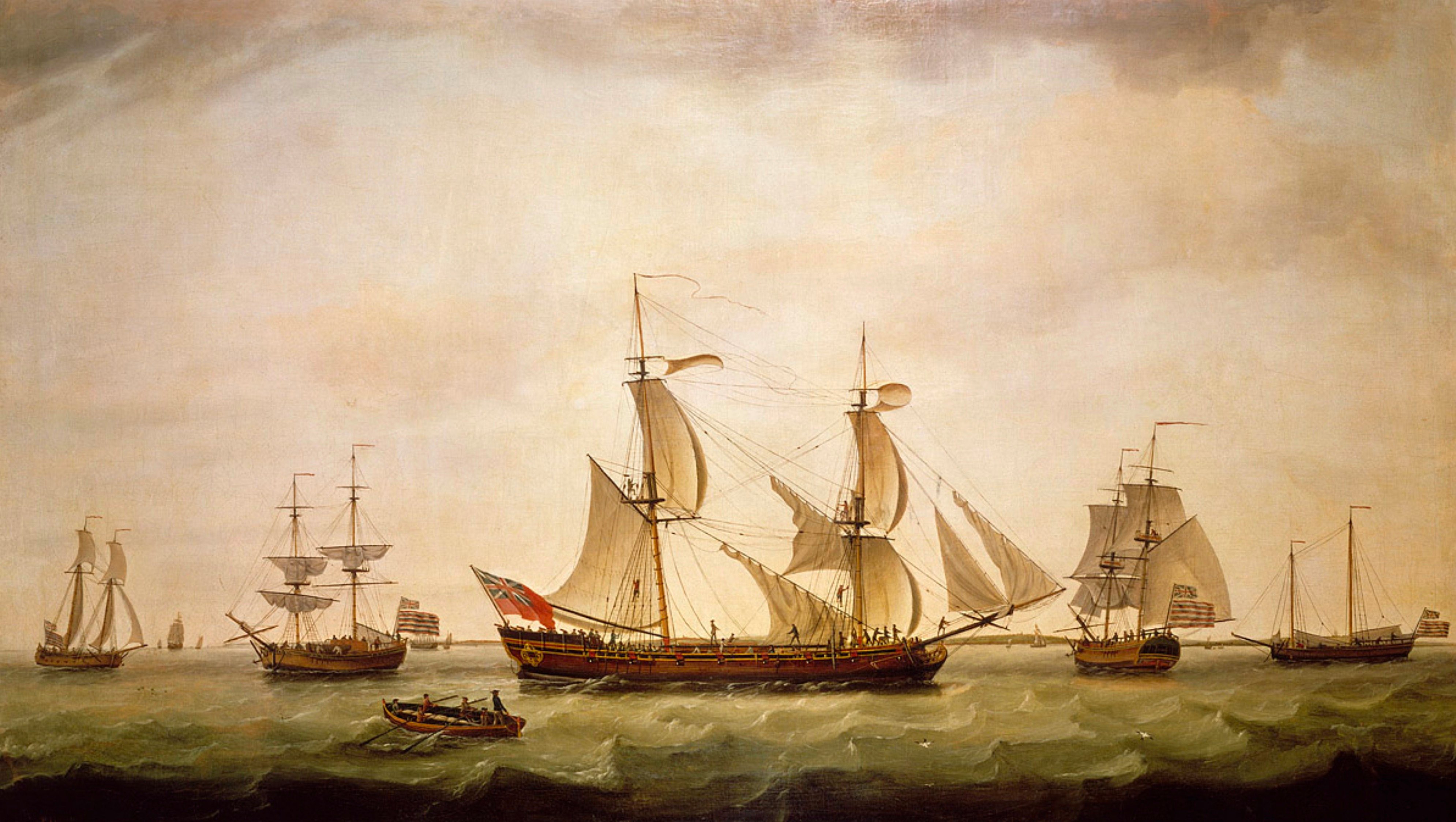
The Brig Independence
1776 • 16 Guns • Massachusetts State Navy
One of the first warships commissioned for American independence, built on Kingston's Jones River and immortalized on the town seal
Type
Brigantine (Brig)
Guns
16 cannons
Built
1776, Kingston, MA
Builder
Drew Family Shipyard
Launched
Days after July 4, 1776
Commander
Captain Simeon Samson
Service
Massachusetts State Navy
Fate
Captured Nov 1776
A Symbol of Independence
The Brig Independence, a 16-gun warship built in Kingston, Massachusetts, in 1776, stands as a significant symbol of local contribution to the American Revolutionary War. Constructed on the historic Jones River, the vessel was one of the first ships commissioned by the Massachusetts State Navy, tasked with defending the coastline and American trade interests against the formidable British Royal Navy.
Under the command of Captain Simeon Samson, a decorated and resilient mariner, theIndependence achieved notable early successes, capturing several British prize ships before its own capture in November 1776.
Its legacy endures. The Independence remains a potent icon for the town of Kingston, immortalized on the official town seal and commemorated by a historical marker on River Street.
The Brig Independence remains featured on Kingston's official town seal to this day
The Genesis of a Warship: Jones River Shipbuilding
The story of the Brig Independence begins on the banks of the Jones River in Kingston, Massachusetts. This area possesses one of the most storied maritime histories in North America, with a legacy of shipbuilding dating back to the early 1700s. The Jones River Landing is considered by some to be the site of the longest continuously operating boatyard in the United States.
The construction of the Independence was championed by William Sever, a prominent Kingston merchant and an influential member of the wartime Massachusetts Council. Sever successfully secured the necessary public funds to build the vessel.
The physical construction took place in a shipyard owned by the Drew family, renowned boatbuilders on the Jones River for over 150 years. The involvement of at least five Drew uncles in the brig's construction highlights the family's significant contribution to this patriotic endeavor.
Construction Details
- • Built by the Drew Family Shipyard
- • Championed by merchant William Sever
- • Supervised by Captain Simeon Samson
- • Launched days after Declaration of Independence
- • Armed with 16 cannons
- • One of first three Massachusetts State Navy ships
Captain Simeon Samson: Commander
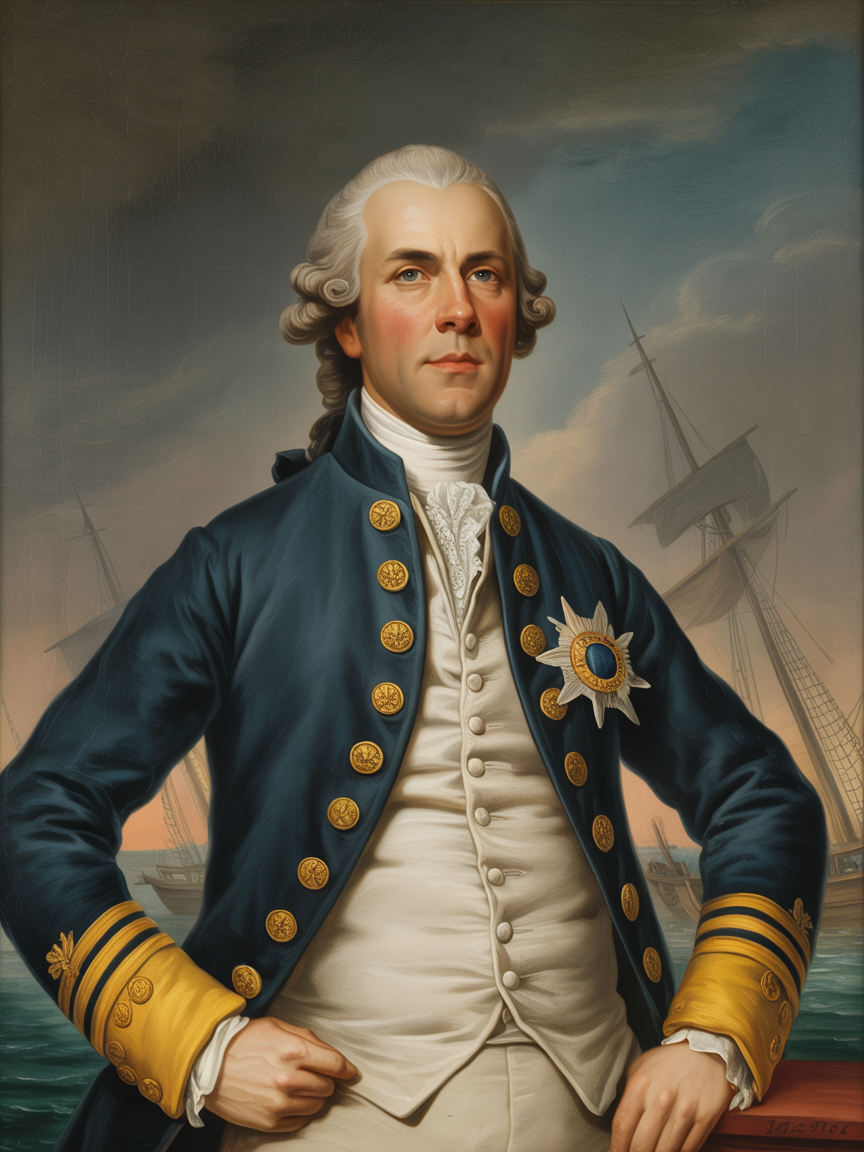
The first and only American commander of the Brig Independence was Captain Simeon Samson(1736-1789). Born in Kingston to Peleg and Mary (Ring) Sampson, he was appointed as the first naval captain in the service of Massachusetts by the Provincial Congress.
A formal manuscript document dated April 17, 1776 confirms his appointment to "take command of the Armed Brigantine Independence." He was entrusted not only with commanding the ship but also with overseeing its construction.
Read Captain Samson's Full StoryService in the Revolutionary War
The brief but spirited career of Kingston's legendary warship
Massachusetts Provincial Congress authorizes construction
Captain Simeon Samson formally appointed to command
Independence launched from Jones River, Kingston
Samson receives orders to cruise against British
Captures five British prize ships including Roebuck
Captured by HMS Hope off Nova Scotia
The Final Engagement
In July 1776, Captain Samson received his formal orders: to "proceed on a Cruize not only against our Unatural Enemies, but also for ye Protection of the Trade of the United States." His operational area was vast, ranging from the coast of Maine southward.
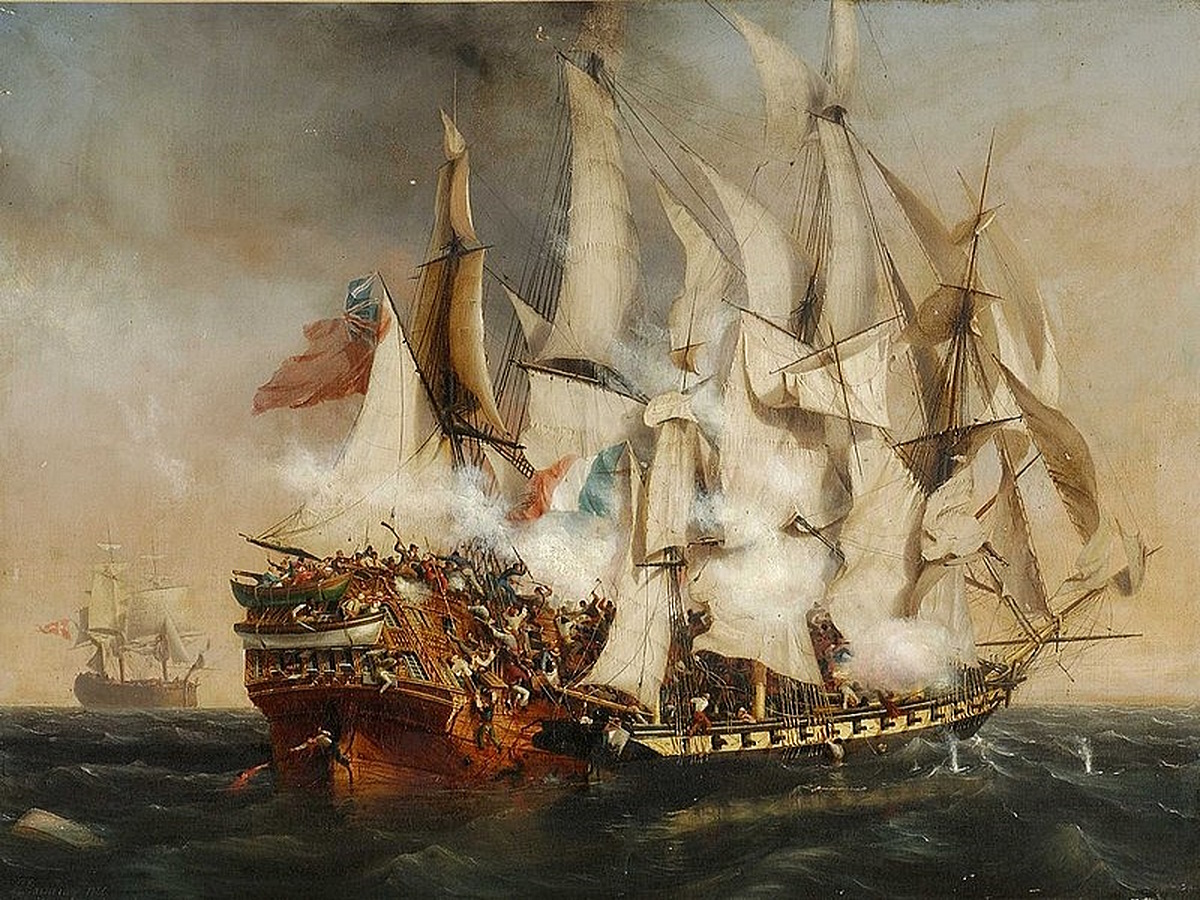
The brig quickly proved its worth. One of its cruises resulted in the capture of five enemy vessels, a significant contribution to the economic warfare being waged against Great Britain.
However, in November 1776, the Independence encountered HMS Hope, a 14-gun Royal Navy brig. Despite possessing superior armament (16 guns versus 14), the crew of HMS Hope skillfully out-sailed their American adversary, taking the Independence intact.
The Final Battle
- Independence: 16 guns, larger crew
- HMS Hope: 14 guns, superior seamanship
- Location: Off coast of Nova Scotia
- Outcome: Captured, taken to Fort Cumberland
- Fate: 14 guns used to reinforce British fort
The Enduring Legacy in Kingston
Despite a service life of less than a year, the Brig Independence has a legacy that far outweighs its military accomplishments. Within the town of Kingston, the ship has been elevated from a historical footnote to a cherished town icon.
The Town Seal
The most prominent manifestation of this legacy is its depiction on the official Town Seal of Kingston. By placing the image of the brig at the center of its civic identity, the town perpetually honors the craftsmen of the Jones River who built it and the sailors who served aboard it.
Historical Marker
The Brig Independence Historical Marker on River Street in Kingston ensures the history of the vessel remains accessible: "In the year 1776, The Brig Independence set sail from Kingston's Jones River to protect the ships and coastline of Massachusetts."
"The Brig Independence remains a powerful symbol of a small town's significant and defiant stand in the face of an empire—connecting the town's industrial past, its civic leadership, and its foundational role during the Revolutionary War."
Historical Note
The Kingston-built Brig Independence should not be confused with the USS Independence, a 10-gun sloop built in Baltimore for the Continental Navy. That vessel served in the Caribbean and was wrecked off North Carolina in 1778. Kingston's Independence was a separate and distinct vessel of the Massachusetts State Navy with its own unique history.
Historical Sources
- • The Brig Independence Historical Marker - Historical Marker Database (hmdb.org)
- • First Parish Church Kingston - kingstonuu.org
- • Naval History and Heritage Command - Independence I (Sloop)
- • The American Revolution Institute - Society of the Cincinnati
- • Jones River Watershed Association - jonesriver.org
- • Buildings of New England - Kingston Maritime History