Father Against Son: The Religious “Civil War” of Kingston
1828
When a theological storm swept through New England, it tore Kingston apart — splitting families, churches, and the very bond between town and parish
Primary Source: Drew, Emily F. “1628 – 1728 – 1828 – 1928: Three Hundred, Two Hundred, One Hundred, Years Ago.” Paper read before The Jones River Village Club Inc., December 8, 1928. Kingston Public Library Local History Collections.
One Church, One Town
For over a century after Kingston's incorporation in 1726, the First Parish Church was far more than a place of worship. It was the undisputed heart of the community — the center of civic life, social order, and moral authority. Church and town governance were inseparable: parish expenses were paid by the Town Treasurer, and church records were kept by the Town Clerk.
Every family in Kingston belonged to the same congregation. Every significant civic event took place within or around the meetinghouse. For over a hundred years, this arrangement went unquestioned. But by the early nineteenth century, a theological revolution was sweeping across New England — and Kingston would not be spared.
The Storm: Unitarianism Comes to Kingston
Across Massachusetts in the early 1800s, a growing “liberal movement” was challenging the traditional Calvinist orthodoxy that had defined New England Congregationalism since the Pilgrims. Unitarianism, with its emphasis on reason, free will, and the essential goodness of human nature, was gaining followers in town after town.
In 1828, the theological tension that had been simmering for years finally reached a breaking point in Kingston. The town was forced to vote on the liberal movement. When the ballots were counted, the majority of the parish voted to sponsor the Unitarian shift.
For the conservative “Orthodox” members — those who held fast to the traditional doctrines of their Pilgrim forebears — this was a profound betrayal. In their eyes, the parish had turned its back on the “faith of the fathers.”
What followed was not a polite theological disagreement. It was, as local historian Emily Drew would describe it a century later, a controversy more intense than any experienced since the Reformation — with a bitterness that even exceeded the early Revolutionary era.
“Father Against Son, Brother Against Brother”
“The roots of religious faith seemed to go even deeper than patriotic loyalty. The controversy pitted father against son, brother against brother.”
— Emily Drew, 1928
The vote of 1828 did not simply divide Kingston along political or economic lines. It cut through the most intimate bonds of family and friendship. Neighbors who had worshiped side by side for decades suddenly found themselves on opposite sides of a theological chasm.
Emily Drew, writing exactly one hundred years after the split, described the anguish with vivid clarity. This was not an argument about distant doctrines — it was a wound that ran through dining tables and family plots. The roots of religious conviction, she observed, reached even deeper than the patriotism that had united the town during the Revolution.
In a town of several hundred families, many of them intermarried and connected through generations of shared history, the fracture was deeply personal. The very families who had built Kingston together now found themselves unable to pray together.
The “Courageous Little Band”
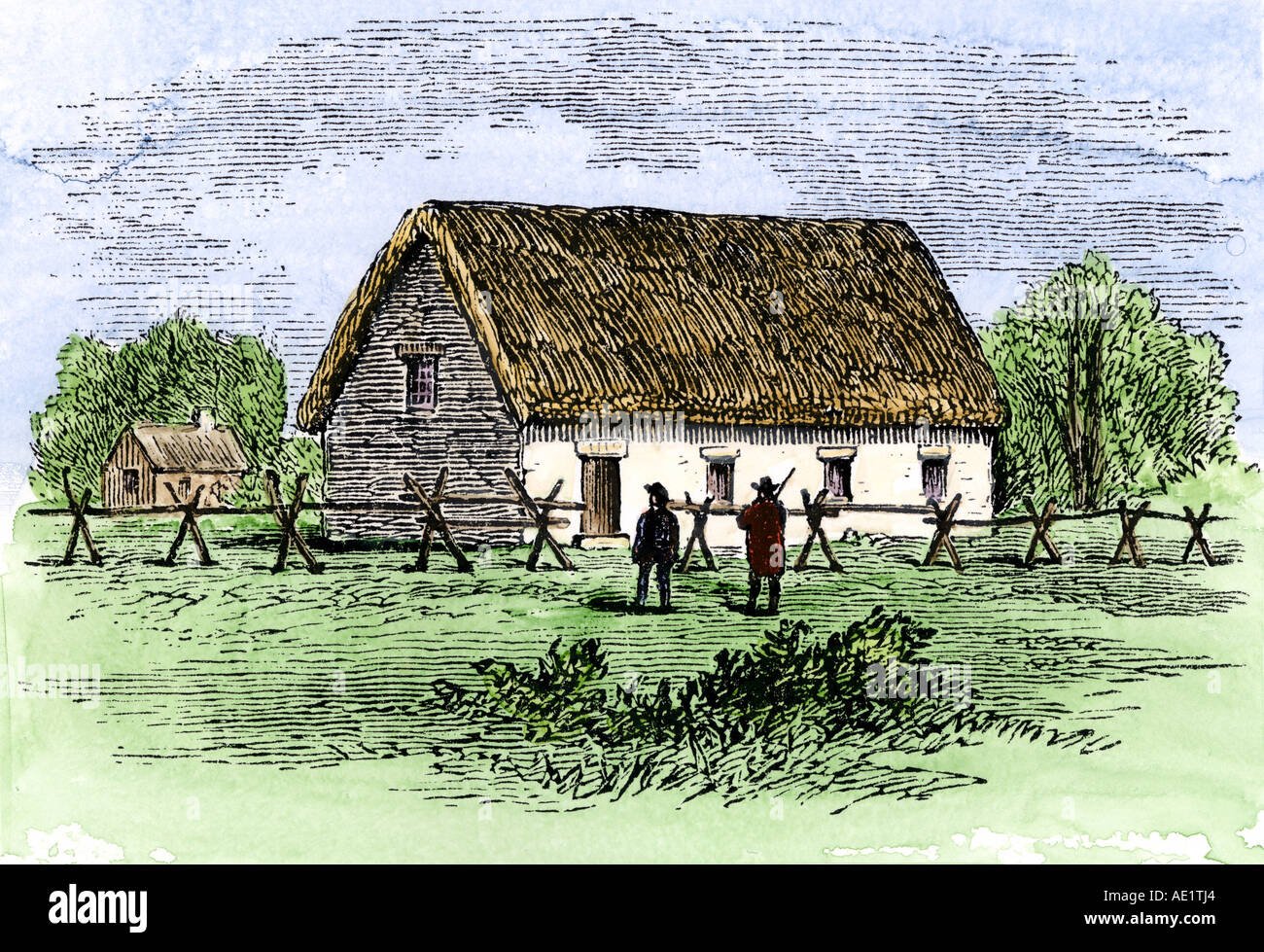
Unable to conscientiously worship with the liberal majority, a group of conservative dissenters made the painful decision to leave the only church Kingston had ever known. Emily Drew described them as a “courageous little band” — a “mere handful of people” and “none of them well-to-do.”
Despite their modest means, their loyalty to the traditional doctrines of their forebears was absolute. They immediately began the daunting work of building their own meeting house — a remarkable act of faith and determination for such a small and financially limited group.
What Emerged
This “courageous little band” eventually became the Mayflower Congregational Church, which they named as a deliberate connection to the Pilgrim faith they believed they were preserving.
Today, the two churches — the First Parish (Unitarian) and the Mayflower Congregational — stand near one another on Main Street, permanent architectural reminders of the heated debates that forged Kingston's identity exactly 200 years ago.
Timeline: From One Church to Two
Jones River Parish established; church and town governance are one and the same
Rev. Joseph Stacey ordained as first minister; parish expenses paid by Town Treasurer
Kingston incorporated; First Parish Church remains the sole congregation
Unitarian "liberal movement" spreads across New England congregations
Kingston votes on the liberal movement; majority supports Unitarian shift
Orthodox dissenters — a "courageous little band" — break away from the parish
Dissenters begin building their own meeting house despite modest means
Church and state permanently separated in Kingston; dissenters refuse parish taxes
The Lasting Impact: Separation of Church & State
The 1828 split fundamentally and permanently changed Kingston's civic structure. Until this “civil war,” the church and the town had been one entity. Parish expenses were paid from public funds, and church records were official town business.
But when the Orthodox dissenters broke away, they refused to pay taxes to a parish they had withdrawn from. The resulting friction forced something that had never existed in Kingston before: a permanent separation of church and state. What had once been a single civic-religious body became two distinct spheres.
In this sense, the controversy of 1828 did not merely create a second church. It modernized Kingston's governance, drawing a line between religious life and civic authority that endures to this day.
Two Churches on Main Street
Today, the First Parish Church (Unitarian) and the Mayflower Congregational Church stand near one another on Main Street — permanent architectural reminders of a community that found its way through crisis to a more pluralistic future.
References & Sources
- • Primary Source: Drew, Emily F. “1628 – 1728 – 1828 – 1928: Three Hundred, Two Hundred, One Hundred, Years Ago.” Paper read before The Jones River Village Club Inc., December 8, 1928. Kingston Public Library Local History Collections.
- • First Parish Church Kingston: Our History (Context on the 1828 call of Rev. Jonathan Cole)
- • Mayflower Congregational Church (History of the “Orthodox” Second Congregational Society)