Kingston's Heroes of the American Revolution
A Tribute to the Men Who Carried Kingston Into Independence
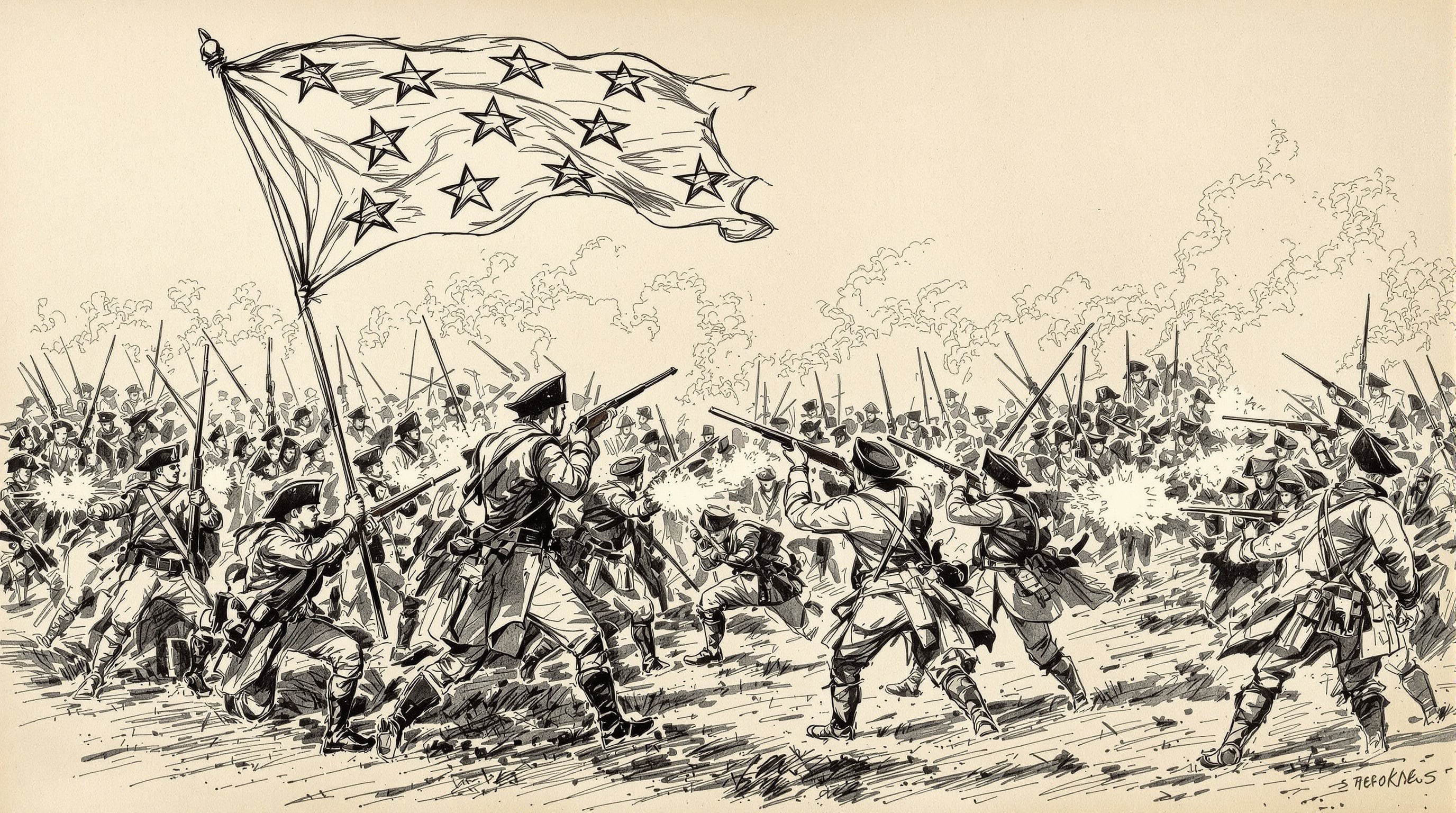
When the alarm spread across Massachusetts on April 19, 1775, the small town of Kingston answered with a force far larger than anyone would expect from a rural community on the Jones River. Farmers left their fields, shipwrights left their yards, and mariners left their wharves to take up arms in what would become the American Revolution.
Between 1775 and 1783, more than 150 Kingston men served in the cause of independence — a remarkable number for a town of its size. Their names appear in town meeting records, muster rolls, pension files, and family histories. Together, they form one of the most complete Revolutionary War rosters in Plymouth County.
Notable Heroes
Major Seth Drew
1747–1824
Captain, 2nd Massachusetts Regiment — Continental Line
Born and raised in Kingston, Seth Drew became one of the town's highest-ranking Continental officers. Serving through the darkest winters of the war, including the Valley Forge period, Drew was part of the professional core that held the army together. After the Revolution he returned home, becoming a respected civic leader. His grave in Kingston remains one of the town's most important Revolutionary markers.
Captain Simeon Sampson
1736–1789
Massachusetts State Navy — Commander of the Brig Independence
Few Kingston stories shine brighter than that of Captain Simeon Sampson. A master mariner born on the Jones River, Sampson was among the first naval captains commissioned by Massachusetts. He commanded the Independence, a warship built right here in Kingston, and achieved early naval victories that boosted Patriot morale. His capture of the British brig Hope became local legend.
Major General John Thomas
1724–1776
Continental Army — Commander at Dorchester Heights
Though born in nearby Marshfield, General John Thomas was deeply connected to the same parish and militia networks that shaped Kingston's early history. A physician turned soldier, Thomas engineered the fortification of Dorchester Heights, forcing the British evacuation of Boston. Later appointed commander of the Canada Expedition, he died of smallpox in 1776. His leadership remains one of the region's greatest contributions to the Revolution.
Families Who Served
The Sampson Family
Kingston's Maritime Backbone
Thirteen members of the Sampson family served during the Revolution, representing one of Kingston's largest and most influential clans. Their service spanned militia duty, naval operations, and privateering. The Sampsons were shipbuilders, sailors, and officers — a family whose story mirrors Kingston's maritime identity.
Bradford, Ring, Hopkins & Howland
Founding Families in a New Revolution
Kingston's oldest families — descendants of Plymouth Colony settlers — stood together once again in the fight for independence. The Bradfords contributed nine soldiers. The Rings sent five. The Hopkins family, descendants of Mayflower passenger Stephen Hopkins, sent five more. The Howlands, another deep Plymouth line, added five of their own.
Gray, Soule, Stetson & Turner
The Militia Backbone of Kingston
These four families alone contributed more than 30 soldiers to the Revolutionary cause. They were farmers, millers, shipwrights, and tradesmen — the everyday citizens who formed the backbone of Kingston's militia companies. Their service reflects the town's deep commitment to local defense and civic duty.
The Kingston Revolutionary War Honor Roll
The full Honor Roll includes every known Kingston soldier, sailor, officer, militiaman, and privateer who served during the American Revolution. It represents the collective sacrifice of a community that believed in liberty long before independence was assured.
View the Complete Honor RollA Town's Legacy
Kingston's contribution to the American Revolution was far greater than its size. Its shipyards built warships. Its families sent sons to the Continental Line. Its militia marched at the first alarm. And its officers helped shape the course of the war.
Today, their names remain woven into the fabric of the town — on gravestones, in family lines, and in the stories passed down through generations.
Kingston remembers them.
Kingston honors them.
And Kingston carries their legacy forward.
Kingston Heritage Project — Honoring 300 Years of Kingston History