Kingston's Industrial Boom
A Snapshot from 1815
How a small New England town became a hive of mills, forges, and factories in less than a century
Far More Than a Quiet Farming Town
By 1815, Kingston was far more than a quiet farming town. In just under a century since its incorporation in 1726, it had developed a remarkably active industrial base for a community of its size.
A contemporary account from 1815 reported an impressive inventory of enterprise: 6 grist mills, 4 sawmills, 1 carding mill, 2 anchor works, 1 forge, and 3 shops producing shovels, spades, screw augers, and similar tools. The town also had 2 cotton factories, both erected in 1813, showing that Kingston was beginning to participate in the early factory age as well.
Kingston's Industries in 1815
A snapshot of what one small New England town was producing
Grist Mills
6Ground grain for local families and regional trade
Sawmills
4Turned timber into boards for homes, ships, and commerce
Carding Mill
1Processed raw wool for spinning and weaving
Anchor Works
2Forged anchors from local bog iron for Kingston's shipyards
Forge
1Produced iron goods and hardware for local use
Tool Shops
3Made shovels, spades, screw augers, and similar tools
Cotton Factories
2Both erected in 1813, marking Kingston's entry into the factory age
19+ industrial operations in a town of just a few hundred families
A Town in Transition
These businesses reveal a town in transition. Kingston still depended heavily on agriculture, but its streams, ponds, and access to the coast made it ideal for early industry. Mills ground grain, cut lumber, and processed wool. Ironworks produced tools and anchors. Shipbuilding at the Landing supported both local commerce and larger maritime connections.
At Rocky Nook, fishing and salt production added to the local economy. In other words, Kingston in 1815 was not simply surviving — it was producing.
Its industrial life grew out of necessity. Early families needed mills to process grain, sawmills to turn timber into boards, and ironworks to supply tools and hardware. Over time, those practical local needs expanded into specialized trades and manufacturing.
By the early 19th century, Kingston had become a small town with a surprisingly varied and energetic economy.
Powered by Water
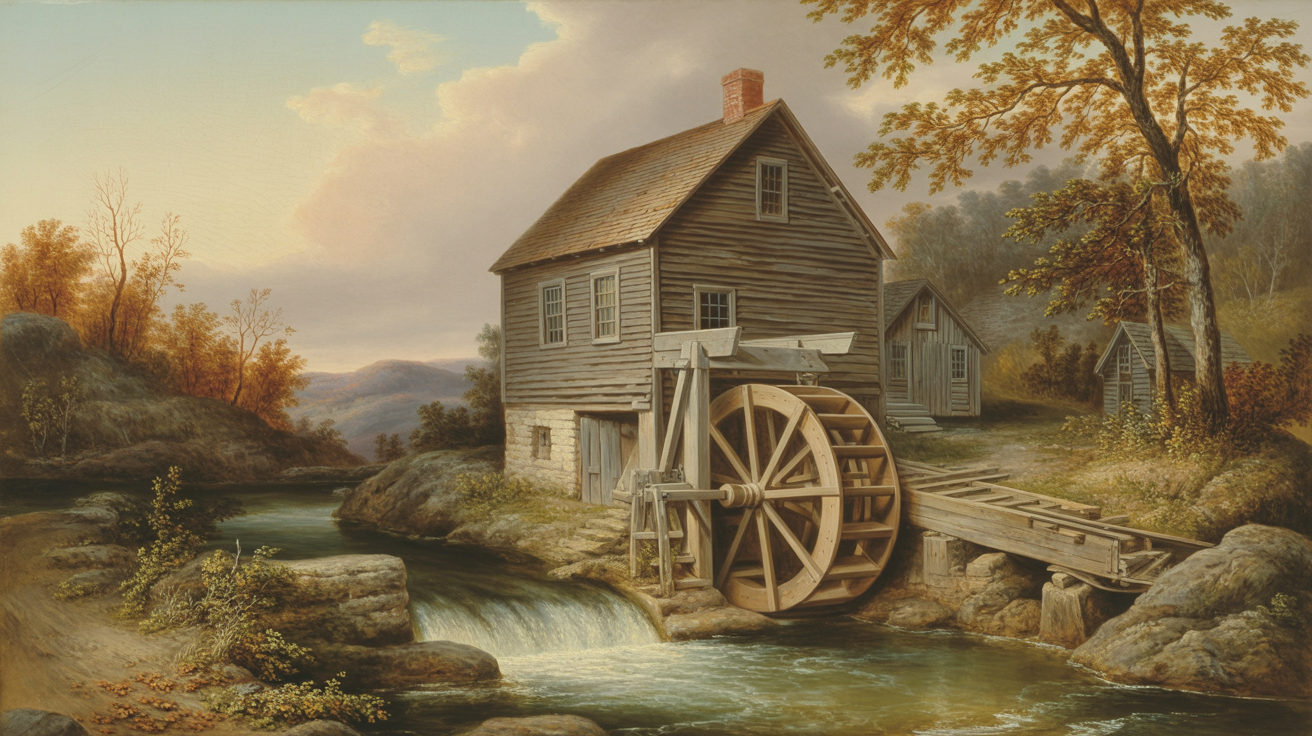
The secret to Kingston's industrial success was water. The Jones River and its tributary brooks provided the power that turned mill wheels, drove sawblades, and operated bellows for the forges. Silver Lake, the Jones River's source, offered a reliable and consistent water supply.
Every one of Kingston's mills and forges was sited along a waterway, harnessing the same natural resource that had first attracted Pilgrim settlers to the area nearly two centuries earlier.
Kingston's Water-Powered Economy
- Jones River — primary power source for mills and shipyards
- Silver Lake — reliable headwater supply
- Tributary brooks — powered smaller mills and forges
- Kingston Bay — fishing, salt production, and maritime trade
This 1815 snapshot reminds us that Kingston's history is not only agricultural and residential — it is also deeply industrial.
Long before modern factories and machine shops, Kingston's brooks, ponds, and working waterfront powered a community of makers, builders, and tradesmen whose influence shaped the town for generations.
Explore Kingston's Maritime Industry
Kingston's industrial heritage went hand in hand with its legendary shipbuilding tradition.